


Rubber Machinery for Automotive Components — Seals, Hoses & Gaskets
Dispersion kneaders, hydraulic presses, cold feed extruders, and mixing mills for automotive seal, hose, gasket, anti-vibration mount, and weather strip manufacturers — Tier-1 and Tier-2 suppliers across India.
Core Industries
Countries
Automotive Rubber Parts Manufacturing — A Growing Precision Segment
India's automotive components industry is one of the largest in the world, supplying both the domestic vehicle market and major OEM export programmes. At the core of every vehicle — from two-wheelers to heavy commercial trucks — is a wide range of rubber components: engine seals, radiator hoses, door weather strips, anti-vibration mounts, suspension bushings, gaskets, and brake system seals.
Automotive rubber parts manufacturing is a precision-intensive process. Dimensional tolerances, compound batch consistency, and cure repeatability are not just quality targets — they are contractual requirements for Tier-1 and Tier-2 automotive component suppliers. The rubber processing machinery used in this segment must deliver consistent output across every shift, every batch, and every operator.
Modern Industries supplies the full range of rubber machinery for automotive component manufacturers — from compound mixing through to moulding and extrusion — configured to the dimensional and quality consistency requirements of automotive supply chain production.
Machines Used in Automotive Rubber Component Manufacturing
Four machines serve the automotive rubber component production line:
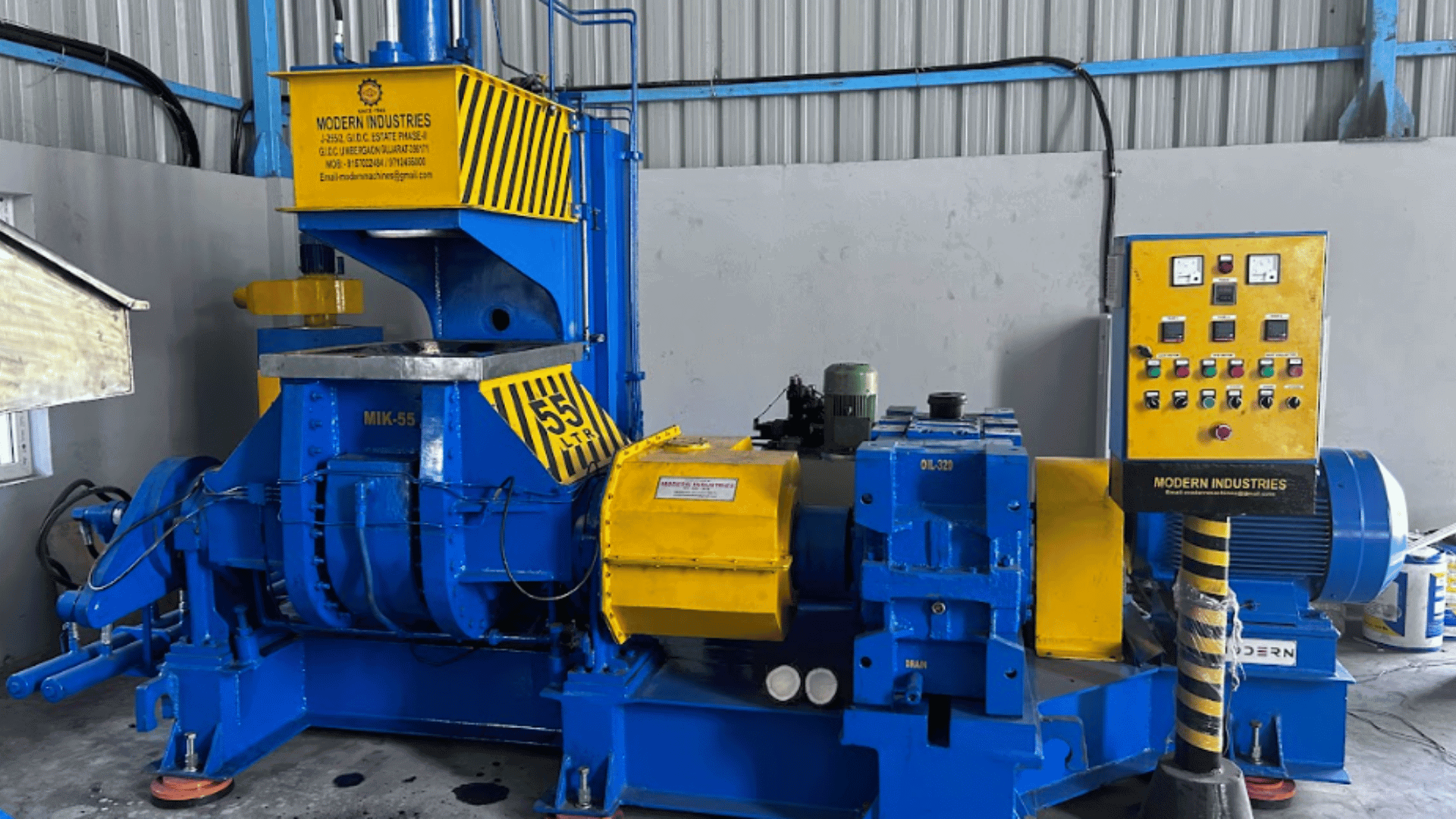
Dispersion Kneader
- Model / Series
- Automotive Application
- Why This Configuration
MIKH-4 to MIKH-7 (35L–100L)
EPDM, NBR, silicone compound mixing for seals, hoses, mounts — high-filler formulations
Hard-faced rotors withstand carbon black and silica without wear-related compound contamination
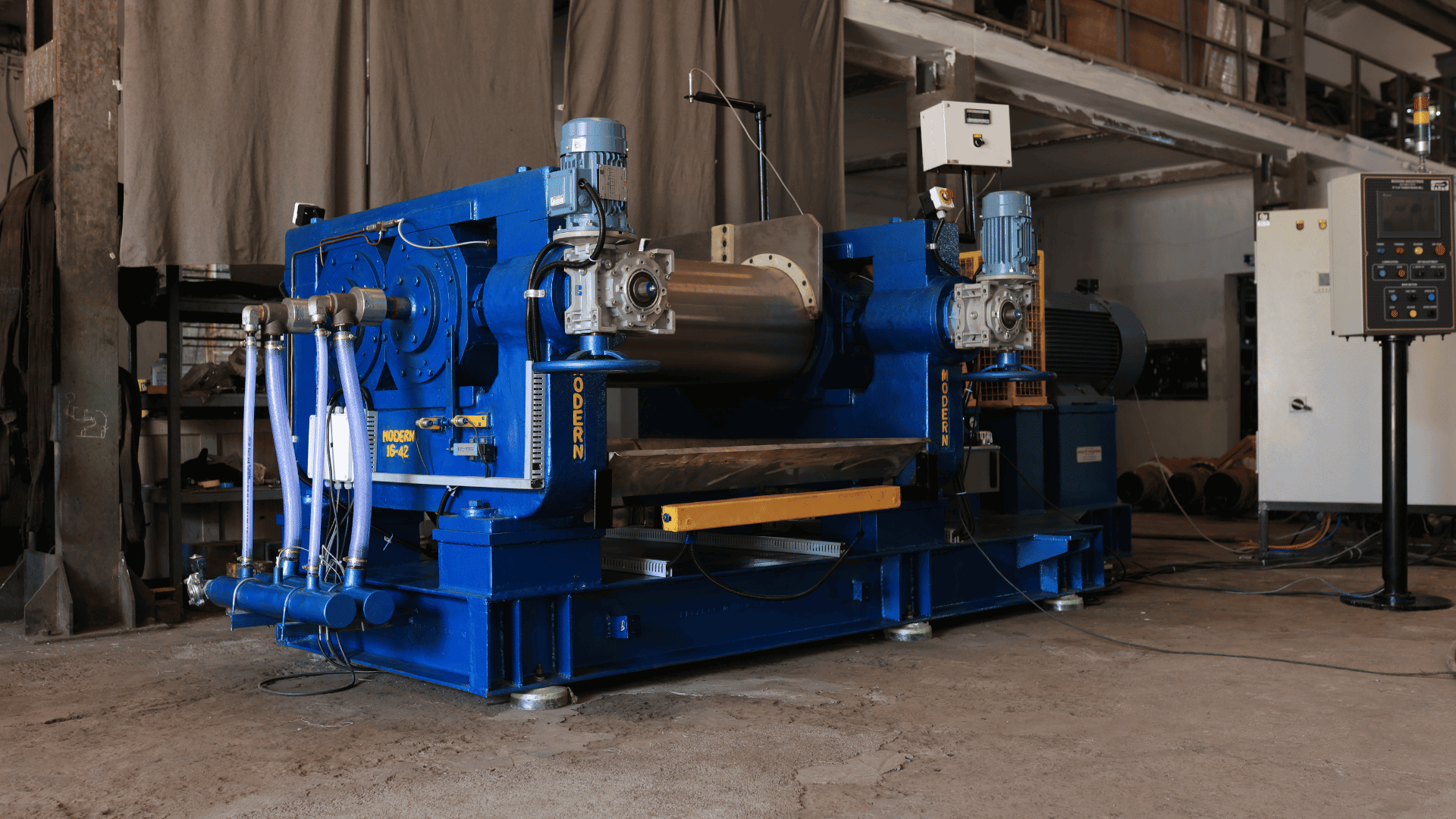
Rubber Mixing Mill
- Model / Series
- Automotive Application
- Why This Configuration
M4–M6 AFB (60–120 HP)
Final compound batching and sheeting before press or extruder feed
Hydraulic nip adjustment maintains consistent gauge across shift changes
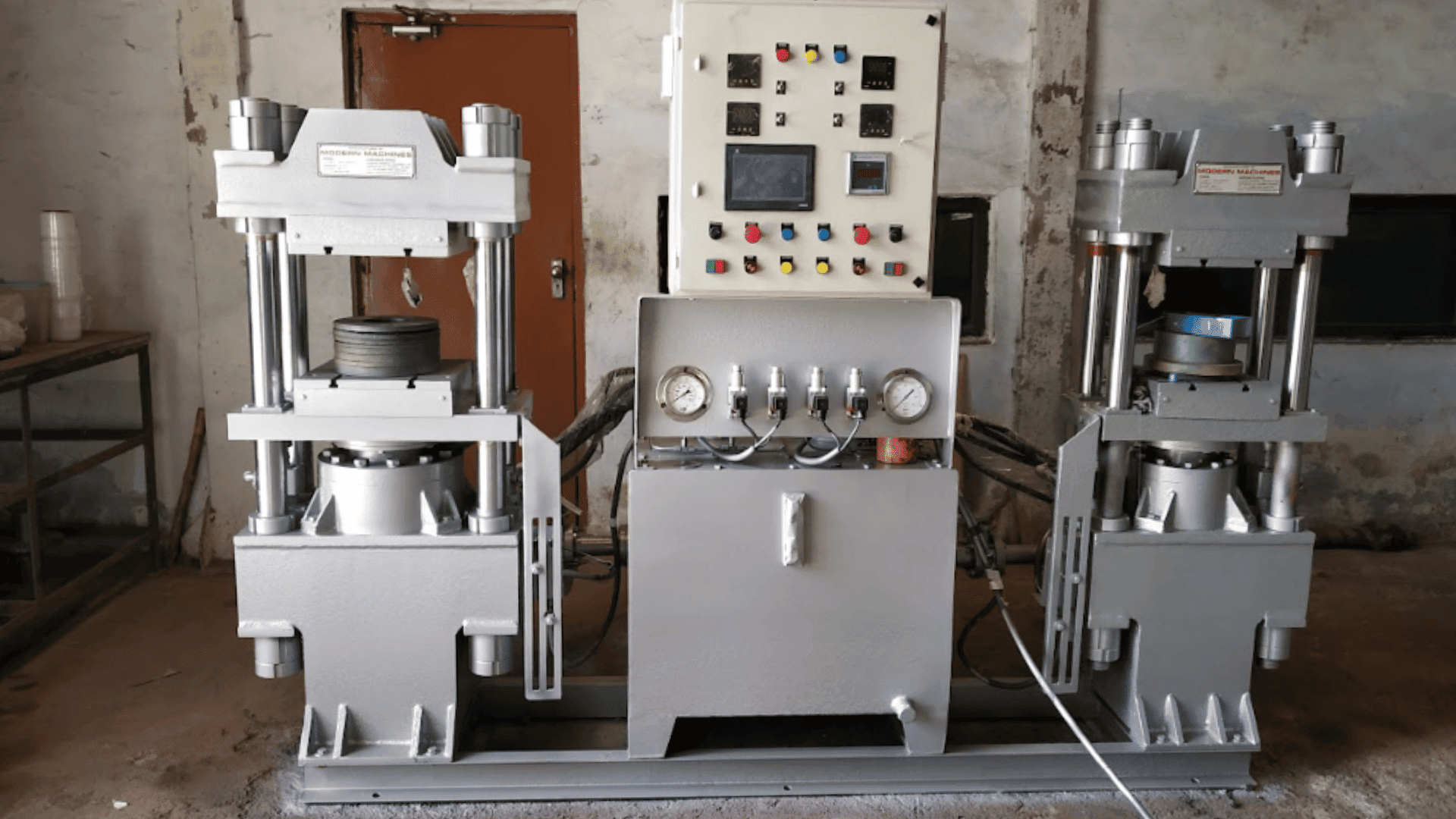
Hydraulic Press
- Model / Series
- Automotive Application
- Why This Configuration
MI-HP-18 to MI-HP-32 (150T–400T)
Compression moulding of seals, gaskets, bushings, anti-vibration mounts
PLC cure cycle + degassing strokes + data recording for automotive quality traceability
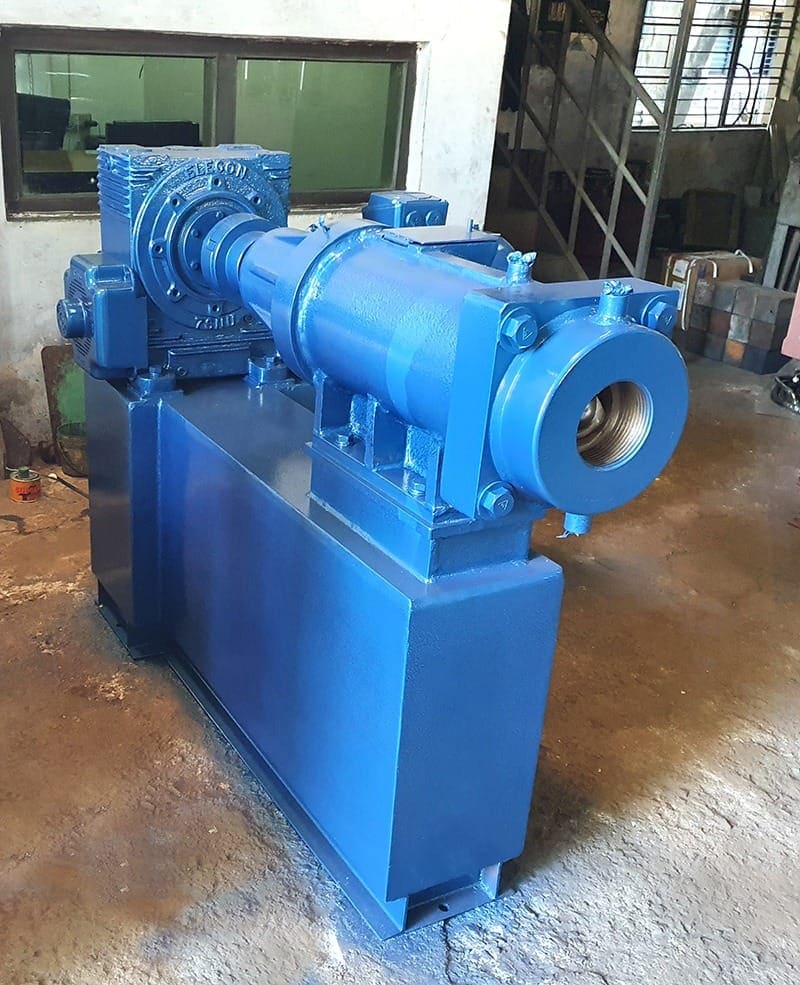
Cold Feed Extruder
- Model / Series
- Automotive Application
- Why This Configuration
CF Series
EPDM weather strips, door seals, window gaskets, hose profiles
Continuous profile extrusion with precise cross-section dimensional control
Automotive Rubber Component Manufacturing Process
Step 1 — Compound Development & Approval
Before full production begins, the compound formulation is tested on a Laboratory Mixing Mill (6"×15" or 8"×18" Automatic model). Test batches are run at the exact same friction ratio and temperature as the production mill. Approved compound parameters — nip gap, rotor speed, temperature profile — are locked before production.
Step 2 — Internal Mixing
The Dispersion Kneader (MIKH-4 to MIKH-7, 35L–100L) handles the primary compound mixing stage. EPDM, NBR, or silicone rubber is blended with reinforcing fillers, plasticisers, and cure system in a closed chamber under controlled temperature and pressure. The hard-faced rotor surfaces on all MIKH kneaders resist the abrasive fillers used in automotive compounds — preventing metal contamination in the compound batch.
Step 3 — Open Mill Batching & Sheeting
Kneader output is transferred to the Mixing Mill (M4–M6 AFB) for open-mill batching — incorporating any remaining additives, adjusting compound viscosity, and sheeting the compound to the required slab thickness for press or extruder feeding. The hydraulic nip adjustment on AFB mills maintains consistent sheet gauge across long production runs.
Step 4 — Compression Moulding (Seals, Gaskets, Mounts)
Moulded components — seals, gaskets, O-rings, bushings, and anti-vibration mounts — are produced in the Hydraulic Press (MI-HP-18 to MI-HP-32, 150T–400T). PLC-controlled cure cycles set pressure, temperature, and cure time precisely. Programmable degassing strokes during the cure cycle eliminate voids — critical for hydraulic and pneumatic seals where porosity causes field failure.
Step 5 — Profile Extrusion (Weather Strips, Hoses, Door Seals)
Continuous rubber profiles — door weather strips, window channel seals, radiator hoses, and brake hose inner liners — are produced on the Cold Feed Extruder. The extruder die controls cross-section dimensions to automotive OEM specification tolerances. Dimensional checks at the extruder exit verify profile geometry against the approved part drawing.
Automotive Rubber Products — Applications Covered
Engine seals & O-rings
- Rubber Material
- Machine Used
- Typical Model
NBR (nitrile)
Hydraulic Press
MI-HP-18 to MI-HP-24 (150T–250T)
Door & window weather strips
- Rubber Material
- Machine Used
- Typical Model
EPDM
Cold Feed Extruder
Profile die — continuous extrusion
Radiator & coolant hoses
- Rubber Material
- Machine Used
- Typical Model
EPDM / silicone
Cold Feed Extruder
Mandrel tube extrusion
Anti-vibration mounts & bushings
- Rubber Material
- Machine Used
- Typical Model
NR or NR/SBR blend
Hydraulic Press
MI-HP-24 to MI-HP-32 (250T–400T)
Gaskets (engine, exhaust, pipe)
- Rubber Material
- Machine Used
- Typical Model
NBR / EPDM / FKM
Hydraulic Press
MI-HP-18 to MI-HP-28 (150T–300T)
Brake hose inner liner
- Rubber Material
- Machine Used
- Typical Model
EPDM / IIR (butyl)
Cold Feed Extruder
Mandrel extrusion + cure
Wiring harness grommets
- Rubber Material
- Machine Used
- Typical Model
EPDM
Hydraulic Press
MI-HP-16 to MI-HP-18 (100T–150T)
Why Automotive Component Manufacturers Choose Modern Industries
- PLC-controlled presses with programmable degassing strokes — eliminates voids in hydraulic and pneumatic seals. Every automotive seal failure in the field costs significant warranty cost; void-free production is non-negotiable
- MIKH kneader with hard-faced rotors — EPDM and NBR compounds with high carbon black loading processed without rotor wear contamination. Contaminated compound causes dimensional rejection and customer returns
- Hydraulic nip adjustment on all AFB mixing mills — consistent compound gauge batch-to-batch without manual re-calibration. Reduces compound waste on gauge rejection at press stage
- PLC cure cycle data recording on all MI-HP presses — batch traceability for Tier-1 automotive quality audits and OEM supplier qualification programmes
- Cold Feed Extruder with dimensional control — produces weather strip and hose profiles to OEM cross-section tolerances across full production shifts without operator compensation
Frequently Asked Questions — Automotive Rubber Machinery
What machines are needed to manufacture automotive rubber seals?
For automotive rubber seals: a Dispersion Kneader (MIKH-4 to MIKH-6) for compound preparation, a Rubber Mixing Mill (M4–M5 AFB) for sheeting, and a Hydraulic Press (MI-HP-18 to MI-HP-28, 150T–300T) for compression moulding. For extruded seal profiles — door seals, window channels — a Cold Feed Extruder replaces the press as the production machine.
What press tonnage is required for automotive gasket moulding?
Automotive gasket moulding typically requires 150T–300T depending on mould area and compound hardness. Small engine seals and O-rings use MI-HP-18 (150T, 460×460 mm). Larger gaskets and multi-cavity moulds use MI-HP-24 to MI-HP-28 (250T–300T, 600×600 mm to 710×710 mm). Our engineering team will confirm tonnage based on your mould dimensions and material specification.
What is a programmable degassing stroke and why is it critical for automotive seals?
A degassing stroke is a brief pressure release during the cure cycle — the press opens fractionally, then re-closes. This allows trapped air and volatile gases to escape from the rubber compound. For hydraulic and pneumatic seals, any residual porosity from trapped air causes leakage failure in service. PLC presses from Modern Industries allow multiple degassing strokes per cure cycle — programmable per compound and per part geometry.
Can Modern Industries machinery meet Tier-1 automotive quality requirements?
Modern Industries presses feature PLC-controlled programmable cure cycles, degassing strokes, and batch data recording — meeting the process control requirements of Tier-1 and Tier-2 automotive component suppliers. The MIKH kneader series provides recipe management and temperature logging for compound traceability. The specific quality system requirements of individual OEMs should be confirmed with our engineering team.
What cold feed extruder is used for EPDM weather strip production?
EPDM weather strip and door seal profiles are produced on a Cold Feed Extruder with the profile-specific die. Cold feed extruders accept pre-mixed, room-temperature compound from the mixing mill and force it through the die without pre-heating — giving better dimensional stability and surface finish than hot feed extrusion for automotive profile applications. Contact our team for screw diameter and drive specification based on your profile dimensions and output rate requirement.