



Silicone Rubber Processing Machine India — Extruder, Lab Mill & Press
Silicone extruders, laboratory mixing mills with stainless steel rolls, and hydraulic presses for medical-grade, food-grade, electrical, and automotive silicone rubber manufacturers — from GIDC Umbergaon, Gujarat.
Core Industries
Countries
Silicone Rubber Processing — India's Premium Rubber Segment
Silicone rubber occupies the premium end of the rubber materials spectrum. It is chosen where conventional rubber compounds fail: at temperatures above 150°C, in direct contact with food, in pharmaceutical and medical applications requiring biocompatibility, in high-voltage electrical insulation, and in automotive applications requiring extreme heat and weather resistance.
India's silicone rubber processing industry is growing rapidly — driven by expansion in medical devices, domestic food processing equipment, pharmaceutical production, and automotive electrification. Silicone rubber manufacturers require machinery specifically designed for silicone's unique processing characteristics — which differ significantly from conventional rubber.
Modern Industries supplies three primary machines for silicone rubber processing: a dedicated Silicone Extruder for continuous profile and tube production, a Laboratory Mixing Mill with stainless steel roll configuration for compound testing and small-batch production, and a Hydraulic Press for compression moulding of silicone components.
Why Silicone Rubber Requires Dedicated Machinery
Silicone rubber cannot be processed on standard rubber machinery without specific modifications. There are three critical differences:
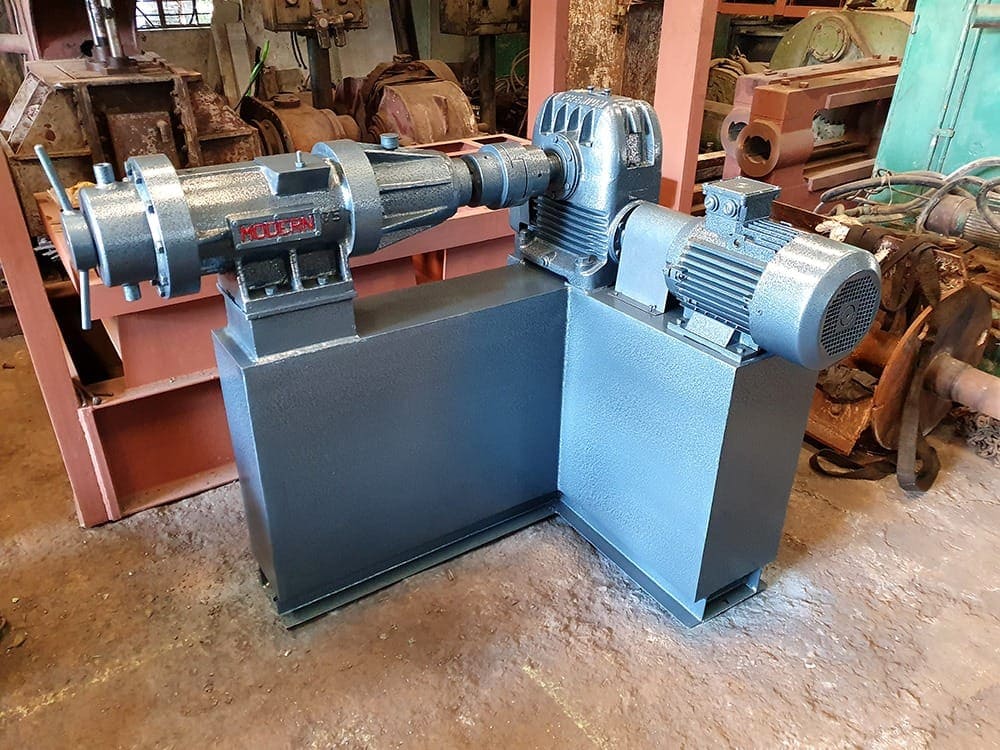
Contamination Risk from Carbon Steel
Silicone rubber reacts with carbon steel and can pick up metal contamination from standard roll surfaces, screw barrels, and die components. For medical-grade and food-grade silicone, even trace metal contamination disqualifies the compound. All silicone-contact surfaces must be manufactured from stainless steel or coated with non-reactive materials. Modern Industries offers stainless steel roll configurations on Laboratory Mixing Mills and stainless-grade internal components on Silicone Extruders.

Low-Shear Processing Requirement
Silicone rubber degrades under excessive shear. The high-shear mixing environment of a dispersion kneader or a fast-running mixing mill damages the silicone polymer chain, reducing physical properties. Silicone compound mixing requires a lower friction ratio, reduced roll speed, and careful temperature management — all controlled through the motorised nip and VFD drive on the Laboratory Mixing Mill.

Temperature-Sensitive Cure System
Most silicone rubber uses a platinum catalyst or peroxide cure system that is activated at specific temperatures. Premature cure during processing causes scrap. Temperature-controlled rolls (TCU-integrated) on mixing mills and precise platen temperature control on hydraulic presses are essential to keep silicone compound below its cure activation temperature during processing and to vulcanise it precisely at the correct cure temperature in the mould.
Machines Used in Silicone Rubber Processing
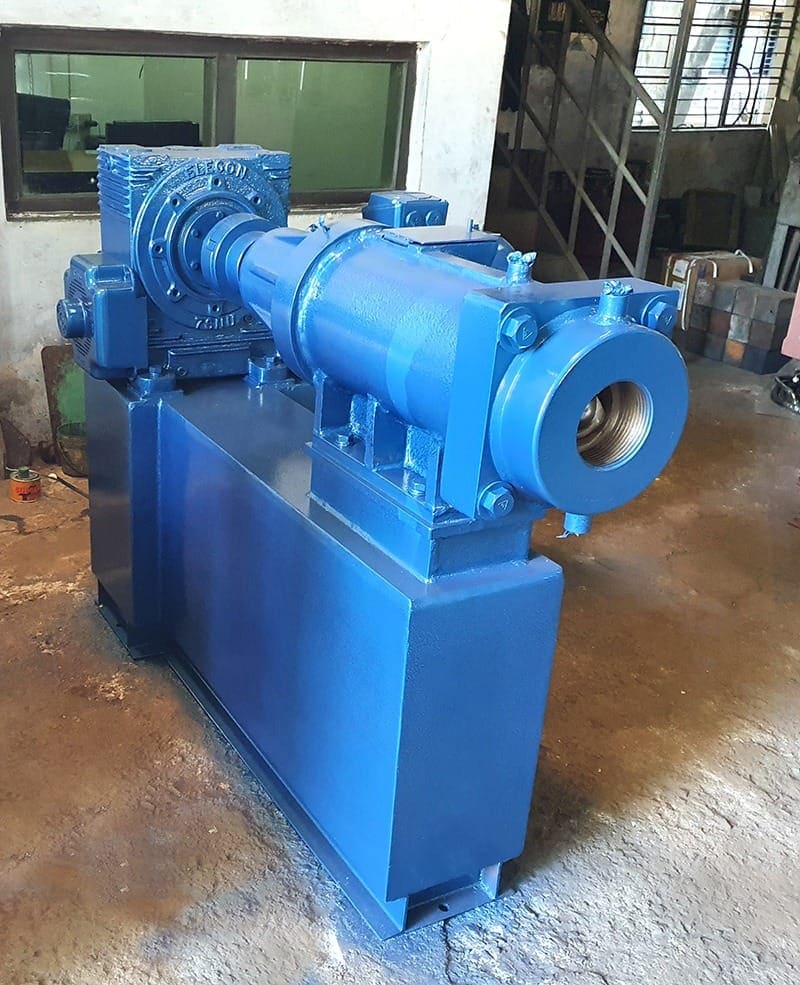
Silicone Extruder
Configuration for Silicone: Stainless-grade barrel, screw & die components
Application: Medical tubing, food-grade profiles, electrical insulation sleeves, automotive weatherseals
Why Silicone-Specific: Stainless contact surfaces prevent metal contamination. Low-shear screw design prevents polymer degradation.
Laboratory Mixing Mill
Configuration for Silicone: Stainless steel rolls · VFD speed control · TCU temperature integration
Application: HTV silicone compound small-batch production, compound QC testing, formulation development
Why Silicone-Specific: Stainless rolls prevent contamination. VFD allows low-shear mixing speed. TCU maintains compound below cure temperature.
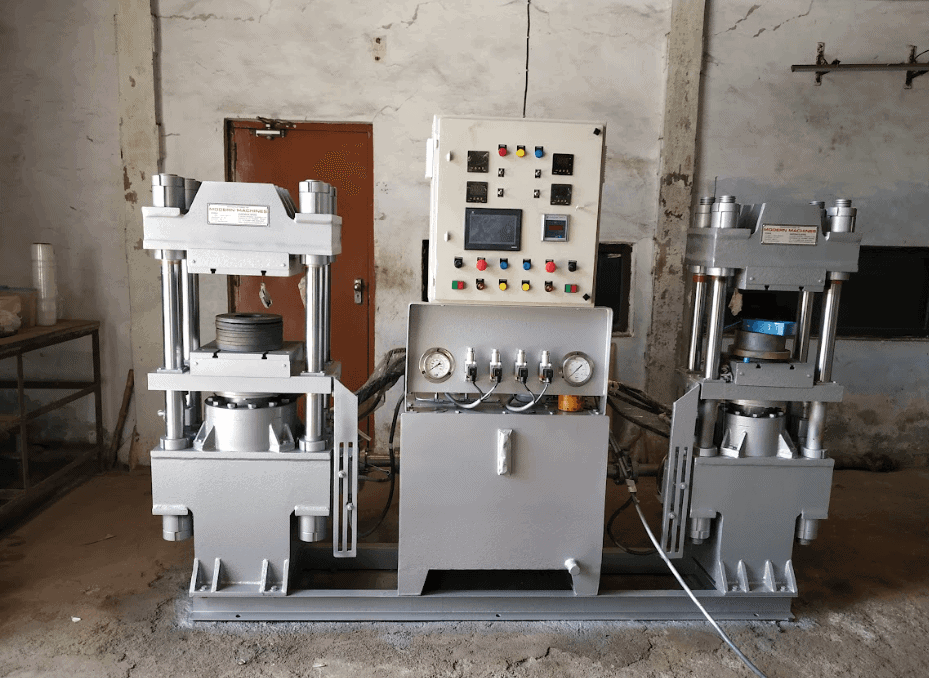
Hydraulic Press
Configuration for Silicone: Electric heating for precise ±2°C platen temperature · PLC cure control
Application: Compression moulding of silicone seals, keypads, medical components, O-rings, gaskets
Why Silicone-Specific: Precise temperature control critical for platinum-catalysed silicone. PLC prevents over-cure.
Silicone Rubber Extrusion — Medical, Food-Grade & Electrical Applications
Medical-Grade Silicone Extrusion
Medical-grade silicone tubing — for peristaltic pump tubes, drainage tubes, catheter sleeves, and IV tubing — requires clean-room compatible production, biocompatible compound formulation, and smooth, contamination-free inner bore surfaces. The Silicone Extruder produces continuous tubing at controlled bore dimensions and wall thickness. Stainless steel die components and regular die cleaning protocols are essential for medical silicone extrusion.
Food-Grade Silicone Extrusion
Silicone profiles and tubing used in food and beverage processing equipment — sealing strips, door gaskets, hose for food transfer — must comply with FDA or FSSAI food-contact material standards. Processing on stainless-steel-contact machinery and using food-grade silicone compound (free from restricted plasticisers and cure residues) are the two primary requirements. Modern Industries Silicone Extruders with stainless-grade components meet these processing requirements.
Electrical Insulation Silicone Extrusion
High-voltage silicone insulation sleeves, cable jacketing, and connector boots are extruded from HTV (High Temperature Vulcanising) silicone compound. The extrusion line requires a silicone extruder with a crosshead die for in-line cable over-extrusion, followed by a continuous vulcanising unit (hot air or steam curing). Modern Industries supplies the extrusion machine; the CVU is integrated by the line designer.
HTV Silicone Rubber — Compound Preparation & Testing
HTV (High Temperature Vulcanising) silicone is the most widely processed silicone rubber grade in India's manufacturing industry. It is a solid silicone gum compounded with reinforcing fillers (fumed silica) and vulcanised at elevated temperature using peroxide or platinum cure systems.
Compound preparation and quality testing for HTV silicone uses the Laboratory Mixing Mill. Modern Industries laboratory mills in the 6"×13" to 8"×18" range with stainless steel roll configuration are used for:
- Incoming raw silicone gum quality testing — viscosity, elongation, and tear resistance
- Colour concentrate dispersion testing — silicone is translucent; pigment must disperse completely
- Compound formulation development — optimising filler loading, cure system, and additive blend for new product specifications
- Scale-up validation — confirming that lab-scale compound properties replicate at production scale before committing to full-batch production
Silicone Rubber Moulding — Compression Moulding of Silicone Components
Silicone keypads, seals, O-rings, medical stoppers, automotive grommets, and electrical connector boots are produced by compression moulding in the Hydraulic Press (MI-HP Series). The press requirements for silicone moulding differ from conventional rubber:
- Precise platen temperature control is essential for HTV silicone moulding , typically operating within the 150–180°C range. Even minor temperature fluctuations can lead to inconsistent hardness and incomplete curing. Modern Industries presses use electric heating with advanced digital control systems to maintain stable and uniform temperatures. Clean mould environment — silicone is viscoelastic and will pick up mould release residue and contamination. Regular mould cleaning between cycles is standard practice.
- Shorter cure time management — silicone cure times are typically shorter than conventional rubber. PLC-controlled press timers with audible alerts ensure consistent cure time management across operators and shifts.
Why Silicone Rubber Manufacturers Choose Modern Industries
- Stainless steel roll option standard on Laboratory Mixing Mills for silicone — the correct configuration for contamination-free silicone compound processing. Not an afterthought — offered as a standard configuration option
- VFD and TCU integration on lab mills — low-shear mixing speed control and temperature management essential for silicone compound quality. Prevents polymer degradation and premature cure during small-batch production
- Modern Industries MI-HP presses are equipped with electric heating systems designed for high platen temperature accuracy and consistency. This ensures the tight thermal control required for both platinum- and peroxide-cured silicone, delivering uniform curing and consistent Shore hardness across batches.
- Laboratory mill configurations (Standard through Automatic) available — the right capability level for silicone applications from academic polymer research through to ISO-certified medical device compound QC
Frequently Asked Questions — Silicone Rubber Processing Machinery
What machinery is needed for silicone rubber processing in India?
Silicone rubber processing requires three machines: (1) a Laboratory Mixing Mill with stainless steel rolls and VFD for compound preparation and QC testing, (2) a Silicone Extruder with stainless-grade internal components for continuous tube and profile production, and (3) a Hydraulic Press with electric heating and precise temperature control for compression moulding silicone components. Modern Industries supplies all three machines with silicone-specific configurations.
What is HTV silicone rubber and how is it processed?
HTV (High Temperature Vulcanising) silicone is a solid silicone gum compounded with reinforcing fillers and vulcanised at high temperature. It is the most commonly processed silicone grade in India for tubing, seals, electrical insulation, and moulded components. HTV silicone is processed on a low-shear mixing mill (for compound prep and testing), a silicone extruder (for profiles and tubes), and a hydraulic press or continuous vulcanising unit (for moulded parts). All machinery must have stainless-grade contact surfaces.
Why can't standard rubber machinery be used for silicone?
Three reasons: (1) Carbon steel contact surfaces contaminate silicone with metal ions — disqualifying it for medical and food-grade applications. (2) Standard mixing mills and kneaders run at shear rates that degrade the silicone polymer chain, reducing physical properties. (3) Silicone cure systems (platinum or peroxide) are temperature-sensitive — machinery without precise temperature control causes premature cure or under-cure. Silicone-grade machinery addresses all three issues.
What platen temperature is required for silicone rubber moulding?
HTV silicone rubber is moulded within a defined temperature range depending on the compound formulation and cure system. Platinum-catalysed silicones generally cure at lower temperatures, while peroxide-cured variants require higher ranges. Uniform temperature distribution across the platen is critical for optimal results, which is effectively achieved through electric heating and digital temperature control. Steam heating is not recommended for silicone moulding due to the risk of condensate contamination.
Can Modern Industries supply machinery for food-grade silicone production?
Yes. Modern Industries supplies Silicone Extruders with stainless-grade internal components and Laboratory Mixing Mills with stainless steel rolls — both configured for contamination-free food-grade silicone processing. The food-grade compliance of the finished product depends on the silicone compound formulation, processing cleanliness, and quality system of the manufacturer. Our machinery provides the contamination-prevention capability required for food-grade production environments.